What Are the Different Types of Filler?
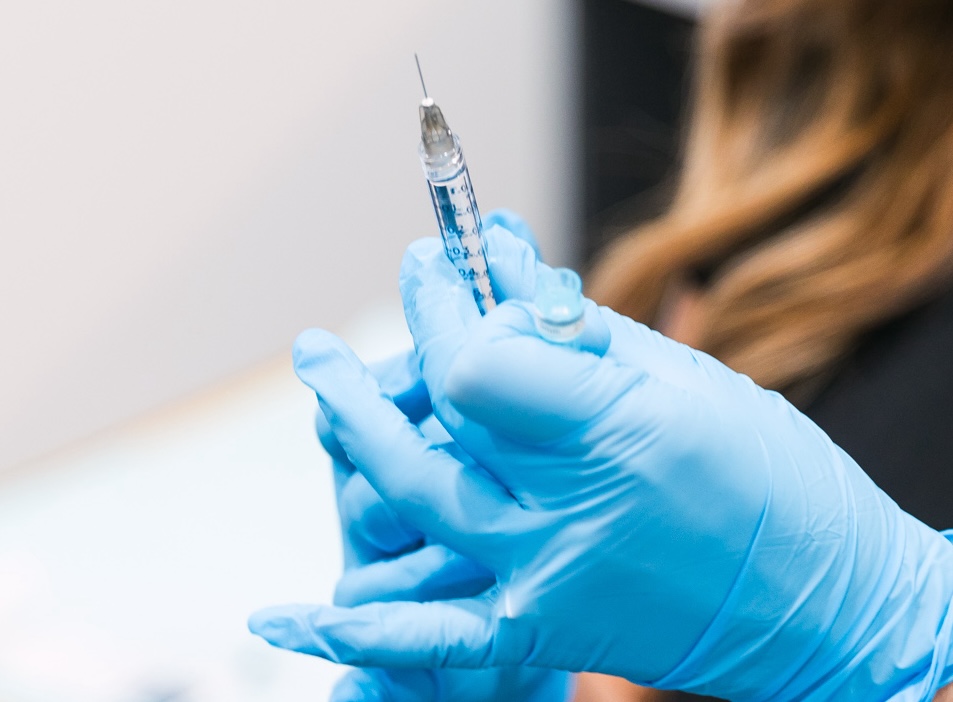
The filler on the market today falls into a few main categories:
- Hyaluronic acid fillers (Juvederm, Restylane, RHA) are the most common. They are reversible, which is a major safety advantage.
- Calcium hydroxylapatite (Radiesse) stimulates some of your own collagen in addition to adding volume.
- Poly-L-lactic acid (Sculptra) is a biostimulator rather than a traditional filler. It works gradually over months by rebuilding your own collagen.
- Polymethylmethacrylate (Bellafill) is semi-permanent and used less often because it cannot be dissolved if you do not like the result.
I choose the category based on the area being treated and how much correction is needed, not just what is trending.
A closer look at hyaluronic acid fillers
Since HA fillers make up most of what I inject, it is worth understanding that they are not all the same product with different names. The manufacturing process changes how the gel behaves once it is in your skin, and that is what determines whether a filler is soft and blending or firm and structural. I think about them along a spectrum from thin and flexible to thick and supportive.
Juvederm family
- Volbella is the thinnest in the line. It is smooth and low viscosity, which makes it ideal for lips and fine lines like perioral lines, where you want subtle volume that moves naturally with the tissue.
- Vollure sits in the middle. It is a bit firmer than Volbella but still flexible, and I use it most for nasolabial folds and marionette lines where I need some structure without stiffness.
- Voluma is the thickest and firmest in the family. It has strong lift capacity, which is why it is my go-to for cheek volumization, restoring projection in a way a thinner gel simply cannot.
Restylane family
- Restylane Kysse is formulated to be soft and stretchy, built specifically for lips so they move naturally when you talk or smile.
- Restylane Refyne and Defyne use XpresHAn technology, which allows the gel to flex with facial expression. I like these for nasolabial folds and marionette lines in patients who want correction that still looks natural when they are animated.
- Restylane Lyft is a firmer, higher G-prime product designed for deeper placement. It works well for cheek augmentation and can also add structure along the jawline.
RHA family
- The RHA (Resilient Hyaluronic Acid) line was engineered specifically to flex with dynamic movement. RHA 2 is softer and suited to superficial lines and lips.
- RHA 3 is a versatile mid-weight option I reach for often in nasolabial folds and cheeks.
- RHA 4 is the firmest, meant for deeper injection and areas needing more structural support, like significant cheek or jawline volume loss.
The general rule across all three families: thinner, lower viscosity gels go in areas with a lot of movement and thin skin, like lips and fine lines. Thicker, higher viscosity gels go in areas that need structural lift and sit under thicker tissue, like cheeks and jawline. Choosing the wrong consistency for the wrong area is actually one of the more common reasons patients end up unhappy with results, even when the injector used a reputable product.