skin tightening without surgery new canaan
The Question
“I’m starting to see softness along my jawline and some crepiness on my neck. I’m not ready for a facelift. What can actually tighten skin without surgery?”
The Short Answer
A lot more than you might think. Today we can tighten skin at every layer, from the surface down to the tissue beneath it, without a scalpel.
The key is matching the treatment to where your laxity actually lives. Most people need a combination, not a single magic device.
Why Skin Loosens: The View Under the Microscope
I trained as a pathologist before I devoted my practice to aesthetics. That means I think about skin the way it looks under a microscope.
Young skin is dense with collagen and elastin, the proteins that give it strength and snap. Fibroblasts, the cells that make those proteins, work hard in your twenties. After that, their output slows every year.
Collagen fibers thin out. Elastic fibers fragment. Sun exposure speeds all of it up.
At the same time, the deeper structures change too. Fat pads shift and shrink. Bone slowly remodels. Rapid weight loss, including weight loss on GLP-1 medications, can remove volume faster than skin can adapt.
So “loose skin” is rarely one problem. It is usually several layers changing at once. That is exactly why one treatment rarely fixes everything.
Your Options, Layer by Layer
1. The Surface: Plasma Skin Rejuvenation
Plasma devices like PlaDuo deliver controlled energy to the skin using ionized gas. The treatment triggers a healing response that stimulates new collagen and speeds cell turnover.
Best for: crepey texture, fine lines, early laxity, and overall skin quality.
What to expect: mild redness for a day or two. Results build over several weeks.
2. The Dermis: RF Microneedling
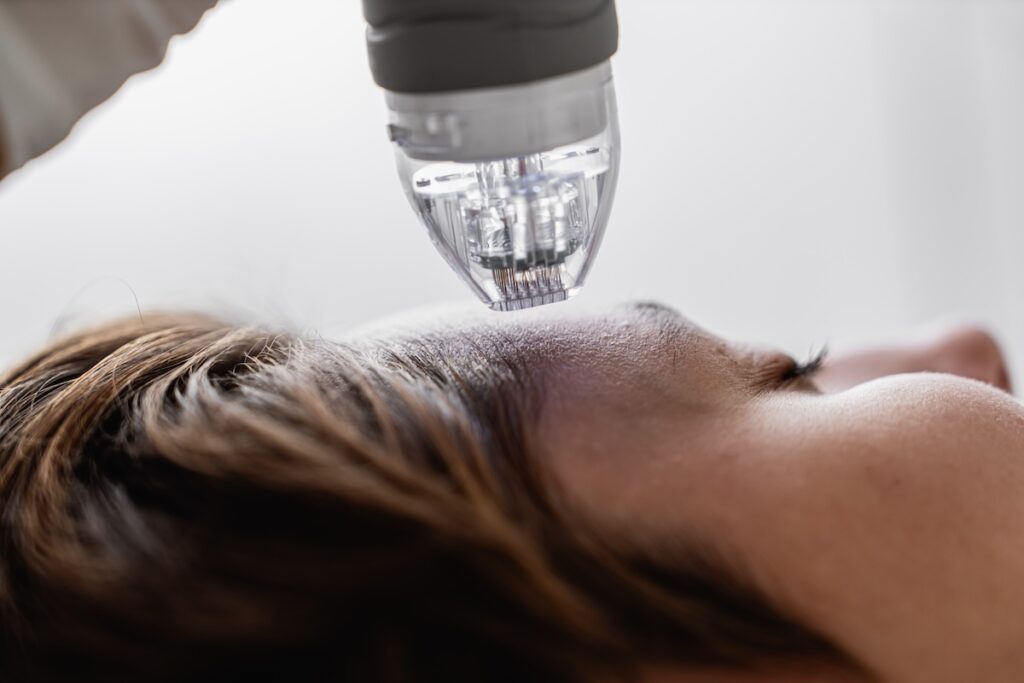
RF microneedling pairs tiny needles with radiofrequency heat. The needles carry the energy into the dermis, the collagen-rich layer beneath the surface, where it remodels existing collagen and prompts your fibroblasts to make more.
Best for: mild to moderate laxity, crepey neck skin, texture, acne scars, and enlarged pores.
What to expect: usually a series of treatments. Most patients have a day or two of redness. Tightening continues to improve for months.
3. The Deep Layer: Subdermal Radiofrequency
This is where non-surgical tightening has made its biggest leap. Attiva delivers radiofrequency heat beneath the skin through a very small entry point, using a thin cannula. The device monitors temperature inside the tissue and on the skin surface throughout the treatment, so I can heat the deeper layers precisely while protecting the surface.
The heat contracts tissue right away, then stimulates new collagen over the following months.
To be clear, this is minimally invasive rather than non-invasive. I use local anesthesia, and you should plan for some swelling or bruising. In exchange, it reaches tissue that surface treatments cannot.
Best for: jowls, jawline definition, the neck, and body areas like the arms and abdomen. It is also one of my go-to options for laxity after significant weight loss.
What to expect: often a single treatment, with some tightening visible early and continued improvement as collagen rebuilds.
4. The Support Structure: Emface
Skin does not hang on its own. It rests on muscle. Emface combines radiofrequency heat for the skin with electrical muscle stimulation for the muscles beneath it, so it tones the support structure and treats the skin in the same session.
Best for: patients who want a subtle lift around the brow and cheeks with no needles and no downtime.
What to expect: a short series of 20-minute sessions. You can go straight back to your day.
5. Rebuilding From Within: Sculptra
Sculptra is not a filler in the usual sense. It is a biostimulator. I place it strategically, and over the following months it prompts your own fibroblasts to lay down new collagen.
Best for: gradual restoration of firmness and structure, especially when volume loss is part of the picture.
What to expect: a series of treatments, with natural-looking results that build over several months.
At a Glance
| Option | Layer | Best For | Typical Downtime |
|---|---|---|---|
| Plasma (PlaDuo) | Surface | Crepey texture, fine lines | A day or two of redness |
| RF Microneedling | Dermis | Mild to moderate laxity, texture | A day or two of redness |
| Subdermal RF (Attiva) | Beneath the skin | Jowls, jawline, neck, body | Several days of swelling or bruising |
| Emface | Skin and muscle | Subtle lift, no needles | None |
| Sculptra | Deep collagen support | Firmness and structure | Minimal |
Why I Usually Combine Treatments
Remember the layers. If your laxity involves thinning dermis, shifting deeper tissue, and a little volume loss, treating only one layer gives you only part of the result.
A typical plan might pair subdermal RF for the jawline with RF microneedling for neck texture, then Sculptra to restore structure. Every plan I build starts with an assessment of your skin, not a menu.
What Realistic Results Look Like
I want every patient to walk in with the right expectations.
Non-surgical tightening improves laxity. It does not replicate a facelift. Results build gradually over three to six months as your body makes new collagen. Most people need a series, and a maintenance treatment every year or so keeps the results going, because your skin keeps aging.
The upside is meaningful: firmer, smoother, more defined skin that still looks like you, with little or no time away from your life.
When Surgery Is the Better Answer
Sometimes the honest answer is surgery. If you have a large amount of excess, hanging skin, heavy neck bands, or significant skin remaining after major weight loss, energy devices cannot remove that tissue.
When that is the case, I will tell you, and I am happy to refer you to a surgeon I trust. Non-surgical treatments can also help maintain results afterward.
A Note for My GLP-1 Patients
Many of my patients on semaglutide or tirzepatide notice their face and neck changing as the weight comes off. This is common, and it is very treatable. The best time to start supporting your skin is during your weight loss, not after. Ask me about it at your next visit.
Frequently Asked Questions
Does skin tightening hurt?
Most treatments feel warm. I use numbing cream for RF microneedling and local anesthesia for subdermal RF. Emface feels like a strong, rhythmic muscle workout and needs no numbing at all.
How long do results last?
The new collagen you build is yours. Aging continues, though, so most patients benefit from maintenance about once a year.
What is the best age to start?
There is no single right age. Many patients start in their late thirties or forties, when they first notice changes. Starting earlier means maintaining collagen rather than rebuilding it.
Can I combine skin tightening with Botox or filler?
Yes, and I often do. Tightening, relaxing, and restoring volume work on different problems, and together they give the most natural result.
Are these treatments safe for all skin types?
Many of these options work well across skin tones, but I evaluate every patient individually before recommending a device or settings.
Let’s Look at Your Skin Together
The right plan depends on what is happening in your skin, layer by layer. I perform every treatment myself, and every plan starts with a physician consultation.
Book your consultation at Intentional Self Aesthetics, 23 Vitti Street in New Canaan.
Dr. Teresa Alasio is a board-certified physician and the founder of Intentional Self Aesthetics in New Canaan, CT.