What Are the Treatment Options for Hair Loss?
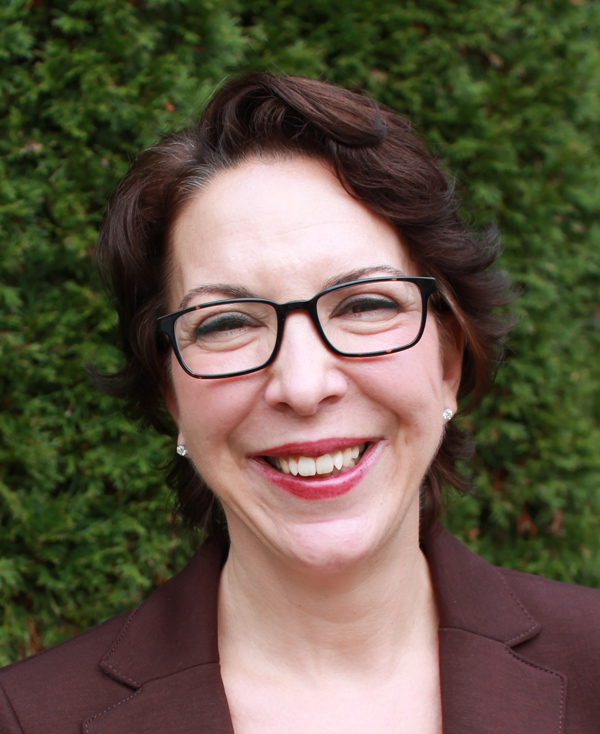
By Teresa Alasio, MD | Intentional Self Aesthetics, New Canaan, CT
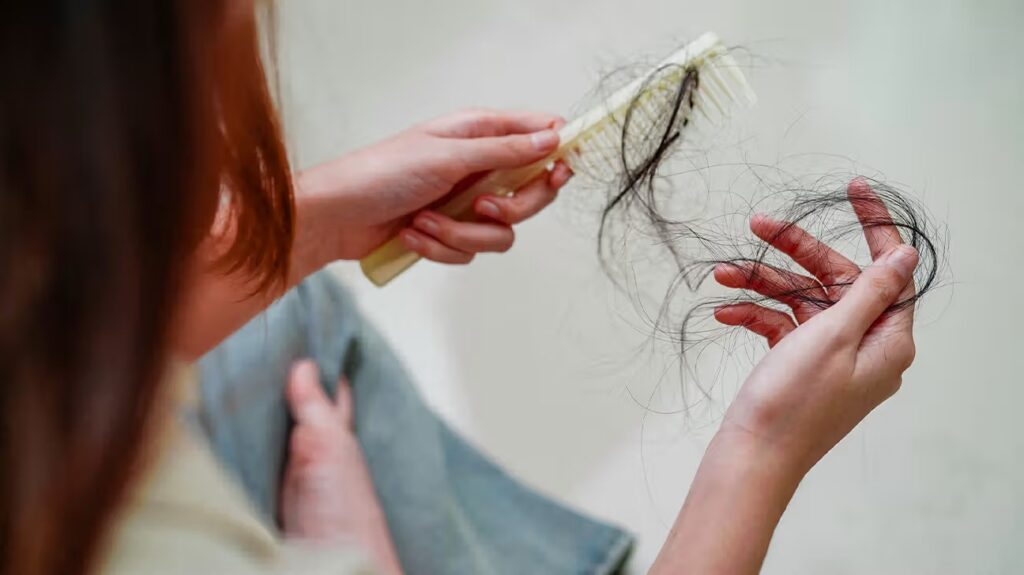
Hair loss is one of the most emotionally significant concerns I see in my practice, affecting both men and women and carrying a psychological weight that is frequently underestimated. The good news is that hair loss treatment options have advanced considerably, and physician-guided intervention started early makes a meaningful difference.
Understanding why hair loss happens:
Before discussing treatment, the cause matters. The most common form, androgenetic alopecia (pattern hair loss), is driven by genetic sensitivity to dihydrotestosterone (DHT), which causes follicles to miniaturize over time. Other causes include telogen effluvium (shedding triggered by stress, illness, hormonal shifts, or nutritional deficiency), alopecia areata (autoimmune), thyroid dysfunction, iron deficiency, and post-menopausal hormonal changes in women.
Treatment that works for one cause may not work for another, which is precisely why a physician evaluation is the starting point, not a product purchase.
What we offer at Intentional Self Aesthetics:
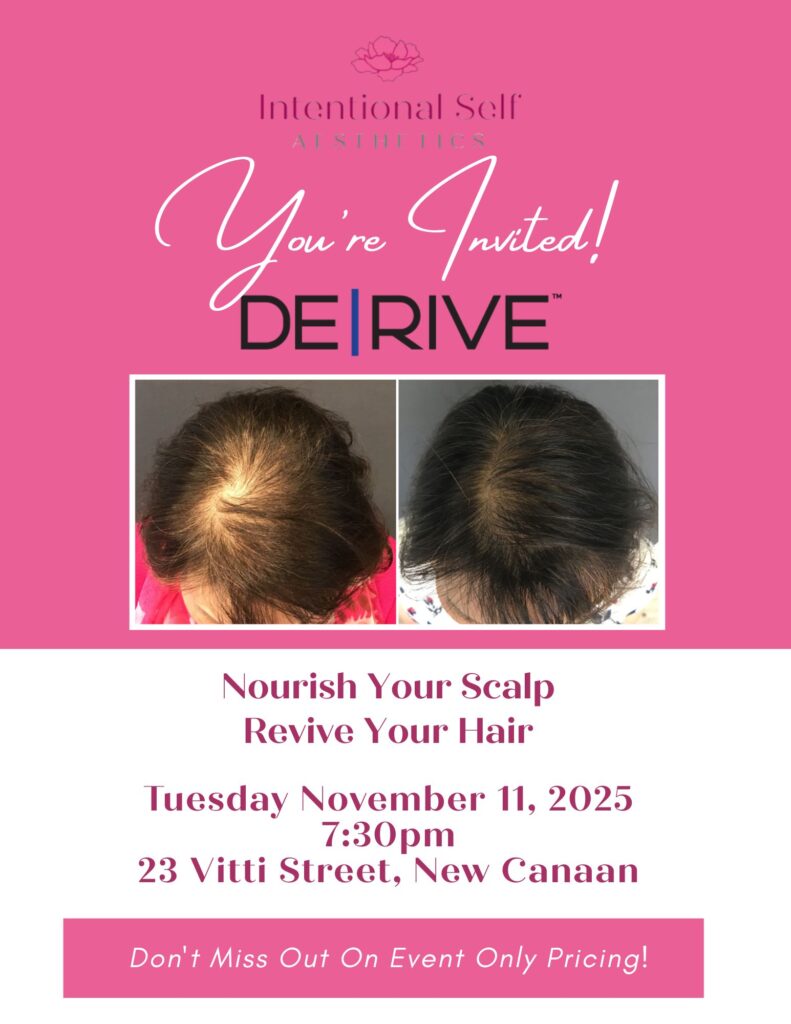
Exosome therapy for hair (DE|RIVE by Aesthetic Management Partners): DE|RIVE is a plant-based exosome hair wellness treatment that delivers bioactive signals to the scalp to support follicle health, reduce inflammation, and encourage a healthier hair growth cycle. Exosomes are extracellular vesicles that carry growth factors, proteins, and signaling molecules that communicate with cells. Applied to the scalp through microneedling, DE|RIVE targets the follicular environment at a cellular level. This is one of the most innovative approaches to hair restoration currently available, without the recovery or risks associated with surgical transplantation.
Topical and prescription options: I evaluate each patient’s hair loss pattern, hormone status, and overall health before recommending a treatment protocol. Physician-prescribed topicals, nutritional assessment, and targeted supplementation are all part of a comprehensive approach to hair health.
The importance of starting early:
Hair follicles that have been dormant for an extended period are significantly harder to reactivate than those that are actively miniaturizing. If you are noticing changes in your hair density, widening part, or increased shedding, earlier intervention produces better outcomes. This is not a situation where waiting to see if it resolves on its own is a good strategy.
Ready to talk about what’s happening with your hair? Request a consultation with Dr. Alasio.
Teresa Alasio, MD is a board-certified physician in Pathology, Cytopathology, and Aesthetics and the founder of Intentional Self Aesthetics at 23 Vitti Street, New Canaan, CT.