How do I decide between filler and botox?
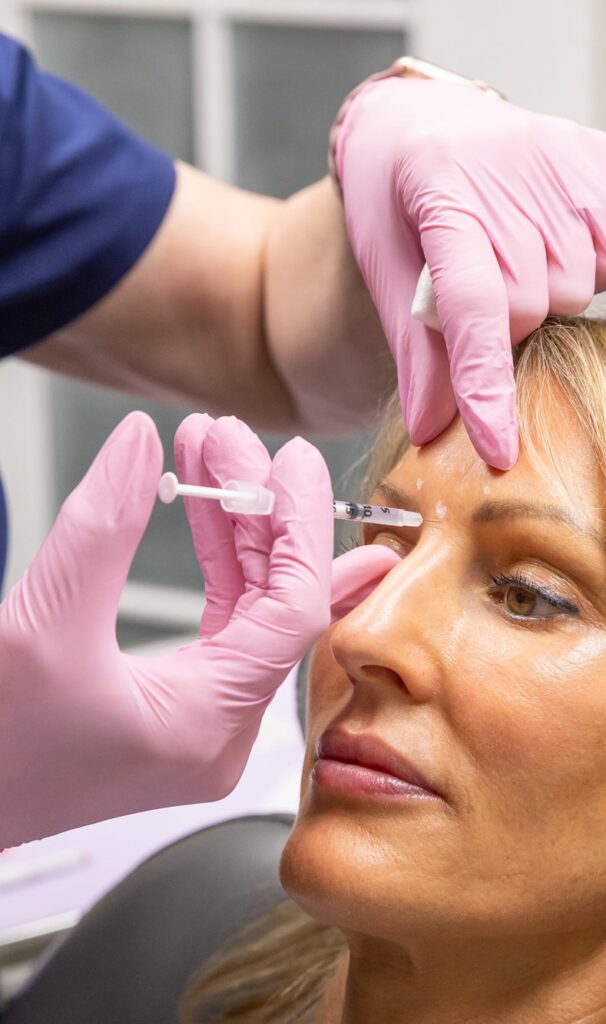
Botox and filler solve different problems. Botox relaxes the muscles that cause movement lines, things like the elevens between your brows or crow’s feet when you smile. Filler adds volume where you have lost it or restores structure that has changed with age, like cheeks, temples, or lips. Many of my patients need both, and I will usually walk through your face with you and explain which lines are from movement and which are from volume loss, since that distinction is really what drives the recommendation.
Dynamic lines versus static lines
The simplest way I explain this in consults is the difference between dynamic and static lines. Dynamic lines only show up when you make an expression, like the forehead lines that appear when you raise your eyebrows or the crow’s feet that show when you smile. These are caused by repeated muscle movement, and Botox is the right tool because it temporarily relaxes that muscle. Static lines are visible even when your face is completely at rest, and they are usually a sign of volume loss or skin laxity underneath, which is where filler comes in. Many lines start as dynamic and become static over years of repeated movement combined with age-related collagen loss, which is exactly why patients often end up needing both.
Where each one is used
Botox is generally the better choice for the upper third of the face: the elevens between the brows, horizontal forehead lines, and crow’s feet. I also use it for a gummy smile, for lip flip effects, and for platysmal bands in the neck.
Filler tends to do more of the work in the mid and lower face and in areas that need shape rather than relaxation: cheeks, temples, under-eye hollows, lips, nasolabial folds, marionette lines, chin, and jawline. Temples in particular surprise patients, since hollowing there is one of the earlier signs of facial aging and it is rarely on anyone’s radar until I point it out.
Why the two are often combined
A lot of what reads as “tired” or “aged” in the mirror is actually a combination of both problems happening in the same area. Someone with deep nasolabial folds might benefit from filler to restore cheek volume, which lifts and softens the fold, combined with a small amount of Botox elsewhere to prevent muscle pull from making the area worse. Similarly, patients getting lip filler often benefit from a small lip flip with Botox to soften the upper lip roll without adding more volume. Treating with both, in the right proportions, tends to give a more balanced result than maxing out either one on its own.
How I approach the decision at your consult
I look at your face at rest first, then ask you to make a few expressions, smiling, raising your brows, scrunching your nose, so I can see which lines disappear when your face relaxes and which ones stay. The ones that disappear are movement-driven and respond to Botox. The ones that remain are structural and respond to filler. From there we talk about your goals, your budget, and how much change you want to start with, since you do not have to correct everything in one visit. I would rather build a plan across two or three appointments than push you into more product or more muscle relaxation than you actually need on day one.