
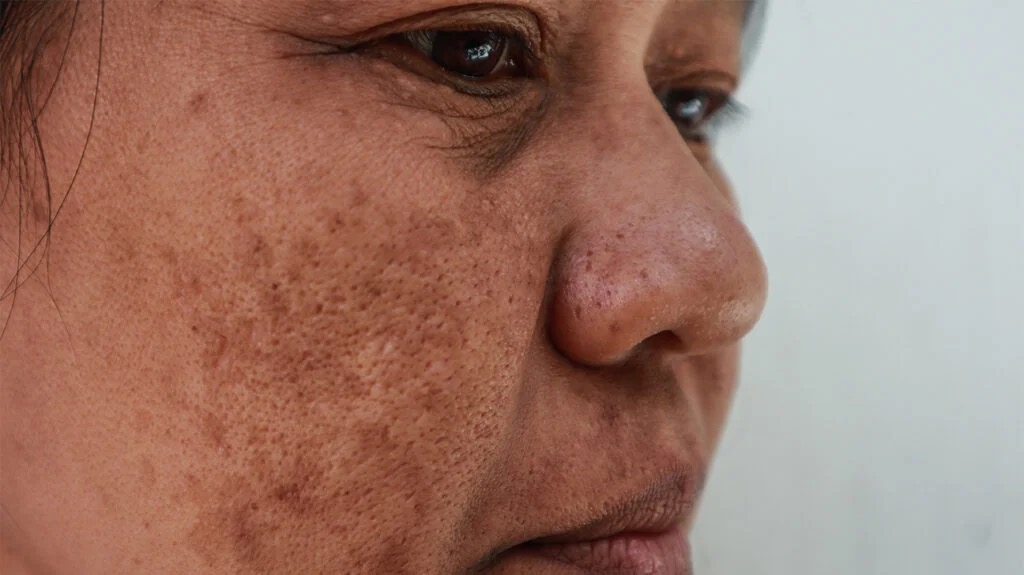
What Is Melasma?
By Teresa Alasio, MD | Intentional Self Aesthetics, New Canaan, CT
Melasma is a common but frequently misunderstood pigmentation condition, and it is one that requires a physician’s eye to diagnose accurately and treat effectively.
What is Melasma:
Melasma is a chronic condition in which patches of darker pigmentation develop on the skin, most commonly on the face. It typically appears symmetrically on the cheeks, forehead, upper lip, nose, and chin. The pigmentation is caused by overactivation of melanocytes, the cells that produce melanin, in response to specific triggers.
What causes it:
The three primary drivers of melasma are UV exposure, hormonal influences, and heat. This is why melasma is significantly more common in women, particularly during pregnancy (where it is sometimes called chloasma or the “mask of pregnancy”), while taking hormonal contraceptives, or during hormonal fluctuations around perimenopause. Sun exposure, even brief and cumulative, is the most powerful trigger and the most important factor to control in any treatment plan.
Genetics also play a role. Melasma is more prevalent in individuals with darker Fitzpatrick skin types (III through VI), though it can affect all skin types.
Why melasma is challenging to treat:
Melasma is not simply excess pigment. It is a condition of dysregulated melanocyte activity that is easily triggered and prone to relapse. Treatments that are too aggressive can worsen it through post-inflammatory hyperpigmentation. Treatments that don’t address the underlying hormonal or UV triggers will see improvement followed by rapid recurrence.
This is a condition that requires a thoughtful, physician-guided protocol, not an over-the-counter brightening product. The distinction matters, because the wrong approach can make melasma significantly worse.
Melasma versus other forms of hyperpigmentation:
Not all dark spots are melasma. Sun spots, post-inflammatory hyperpigmentation from acne or injury, and seborrheic keratoses all look different and are treated differently. Accurate diagnosis before treatment is essential. I evaluate pigmentation at consultation to confirm the type before recommending any protocol.
For information on how melasma is treated and how it differs from chloasma, see the related Ask Dr. Alasio posts.
Concerned about pigmentation on your face? Request a consultation with Dr. Alasio.
Teresa Alasio, MD is a board-certified physician in Pathology, Cytopathology, and Aesthetics and the founder of Intentional Self Aesthetics at 23 Vitti Street, New Canaan, CT.